







In the modern era of sports betting, intuition and gut feelings are no longer enough. The most successful bettors are those who embrace data analytics, using statistics, predictive models, and key performance indicators to guide their decisions. In the fast-paced world of crypto sports betting, where markets move quickly and transactions are instant, the ability to analyze data effectively can provide a significant edge.
This guide explores the role of data analytics in crypto sports betting. We will cover key metrics, predictive models, and how to use data to identify value and make smarter bets. For more insights and analytical strategies, visit smartbodyz.com.
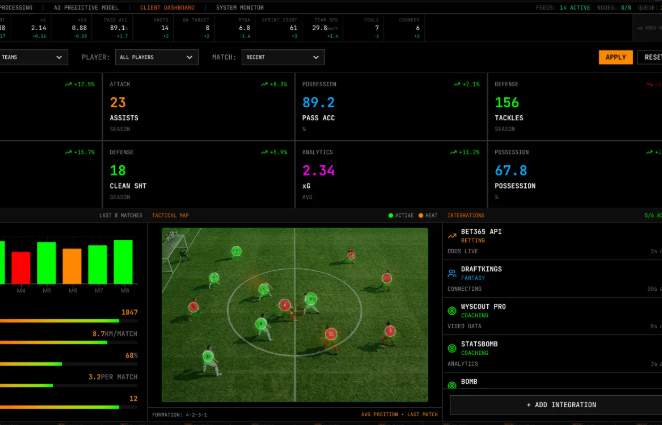
The Rise of Data Analytics in Sports Betting
From Intuition to Information
Historically, sports betting relied heavily on intuition, inside knowledge, and basic statistics. Today, the landscape is dominated by data. Advanced analytics, machine learning, and big data have transformed how odds are set and how bettors approach the market.
The Role of Crypto
Crypto sportsbooks are at the forefront of this data revolution. The speed and efficiency of crypto allow bettors to react quickly to new information and data, while the transparency of blockchain can provide access to verifiable data sources.
Key Metrics for Sports Betting
Traditional Statistics
These are the basic, widely available statistics that form the foundation of any analysis.
-
Football (Soccer): Goals scored, goals conceded, shots on target, possession, passing accuracy.
-
Basketball: Points per game, rebounds, assists, field goal percentage, three-point percentage.
-
American Football: Yards gained, touchdowns, turnovers, quarterback rating.
-
Baseball: Batting average, ERA, home runs, strikeouts.
Advanced Metrics
Advanced metrics go beyond basic statistics to provide a deeper understanding of performance.
-
Football (Soccer): Expected Goals (xG), Expected Assists (xA), pass completion rate in the final third.
-
Basketball: Player Efficiency Rating (PER), True Shooting Percentage (TS%), Offensive and Defensive Ratings.
-
American Football: DVOA (Defense-adjusted Value Over Average), EPA (Expected Points Added), success rate.
-
Baseball: WAR (Wins Above Replacement), FIP (Fielding Independent Pitching), exit velocity.
Contextual Data
Contextual data includes factors that can influence performance but are not reflected in basic statistics.
-
Injuries: Player availability and fitness levels.
-
Weather: Rain, wind, temperature, and humidity.
-
Venue: Home vs. away, altitude, pitch/court conditions.
-
Schedule: Travel, rest days, fixture congestion.
-
Motivation: Importance of the game, rivalries, playoff implications.
Building a Predictive Model
Define Your Objective
What are you trying to predict? The winner of a match? The total points scored? A specific player’s performance? Your model should be tailored to your objective.
Gather Your Data
Collect historical data on the relevant variables. This can include statistics, contextual data, and market odds. Many sports data providers offer APIs for this purpose.
Choose Your Model
There are many types of predictive models, ranging from simple linear regression to complex machine learning algorithms.
-
Linear Regression: A simple, interpretable model that can be used to predict continuous outcomes (e.g., total points).
-
Logistic Regression: Used for binary outcomes (e.g., win/loss).
-
Decision Trees/Random Forests: More complex models that can handle non-linear relationships.
-
Neural Networks: Powerful but complex models that require large amounts of data.
Train and Test Your Model
Use a portion of your data to train the model (teach it to recognize patterns) and another portion to test it (evaluate its accuracy). This helps you avoid overfitting, where the model performs well on training data but poorly on new data.
Iterate and Improve
Models are not static. You should continually update your model with new data and refine its parameters to improve its accuracy.
Using Data to Identify Value
Compare Your Predictions to the Odds
Once you have a model that produces predictions, compare them to the odds offered by the bookmakers. If your model predicts a higher probability of an outcome than the odds imply, you have found a potential value bet.
Look for Market Inefficiencies
The sports betting market is not always efficient. Factors like public sentiment, recent performance, and media hype can create temporary inefficiencies that analytical bettors can exploit.
Focus on Niche Markets
Data analytics can be particularly effective in less popular markets where the odds are less efficient. This includes lower-tier leagues, niche sports, and player props.
Tools and Resources for Data Analytics
Sports Data Providers
-
ESPN: Offers a wide range of statistics and data.
-
Stats Perform: A leading provider of sports data and analytics.
-
Opta: Known for detailed football (soccer) data.
-
Sportradar: Provides data and insights for multiple sports.
Analytics Platforms
-
Python: A programming language with powerful libraries for data analysis (e.g., Pandas, NumPy, Scikit-learn).
-
R: Another popular language for statistical computing and graphics.
-
Microsoft Excel: A more accessible tool for basic data analysis.
Odds Comparison Sites
-
OddsChecker: Compares odds from multiple bookmakers.
-
OddsPortal: Another popular odds comparison tool.
The Role of Crypto in Data-Driven Betting
Speed of Execution
When data reveals a value opportunity, speed is crucial. Crypto allows you to place bets almost instantly, ensuring you get the best odds.
Access to Global Markets
Crypto sportsbooks offer access to a wide range of markets, allowing you to apply your analytics to a broader set of opportunities.
Transparency
Blockchain technology can provide access to verifiable data sources, such as on-chain statistics or decentralized betting exchanges.
Risk Management with Data
Quantify Your Edge
Use your data to quantify your edge. This allows you to adjust your stake sizes based on the strength of your prediction.
Track Your Performance
Keep detailed records of your bets and compare your actual results to your model’s predictions. This helps you identify areas for improvement.
Avoid Overfitting
Do not overcomplicate your models. A simple model that works well on new data is often better than a complex model that only works on historical data.
Common Data Analytics Mistakes
Overvaluing Recent Performance
Recent performance can be a useful indicator, but it is not the only factor. Avoid placing too much weight on a small sample size.
Ignoring Context
Data without context can be misleading. Always consider the broader context of a game.
Confirmation Bias
Do not seek out data that confirms your pre-existing beliefs. Be objective and consider all the evidence.
Who Benefits Most From Data Analytics
Analytical Bettors
Bettors who enjoy research, data analysis, and critical thinking will find this approach natural.
High-Volume Bettors
For those who place many bets, even a small edge can lead to significant profits.
Crypto Enthusiasts
Crypto users who value speed and efficiency will appreciate the ability to quickly act on data insights.
Final Verdict
Data analytics is transforming sports betting. By embracing statistics, building predictive models, and using data to identify value, bettors can gain a significant edge over the market. The speed and efficiency of crypto make it the ideal platform for implementing a data-driven strategy.
However, it is important to avoid common mistakes, manage your risk, and continuously refine your approach. With the right tools and mindset, data analytics can be a powerful tool for success in crypto sports betting.
Ready to bet with data? sportsbet crypto sports betting offers a wide range of markets to apply your analytics. For more insights and analytical strategies, browse smartbodyz.com.